

Learning how to practice drums effectively matters more than simply spending extra hours behind the kit. Most beginners assume that the longer they play, the faster they’ll improve. After more than 40 years of playing and teaching, I can tell you it doesn’t work that way. A student who plays aimlessly for an hour often progresses less than one who spends 15 focused minutes with a clear goal.
Focused practice means you know what you’re working on, you can hear whether you’re getting it right, and you stop before sloppy habits creep in. Playing longer only helps if the time is well spent. The routine below gives you a simple structure so every minute counts, whether you have a full kit or just a pad.
How to Practice Drums Effectively as a Beginner
Three principles make the biggest difference.
Set one goal per session. “Get better at drums” is too vague to act on. “Play a clean eighth-note groove at a steady tempo” is something you can actually check. Choose one thing, and let everything else in the session support it.
Use a comfortable tempo. If you have to tense up or hunt for notes, you’re going too fast. Slow practice gives your hands and feet time to learn the correct motion, and speed comes naturally later.
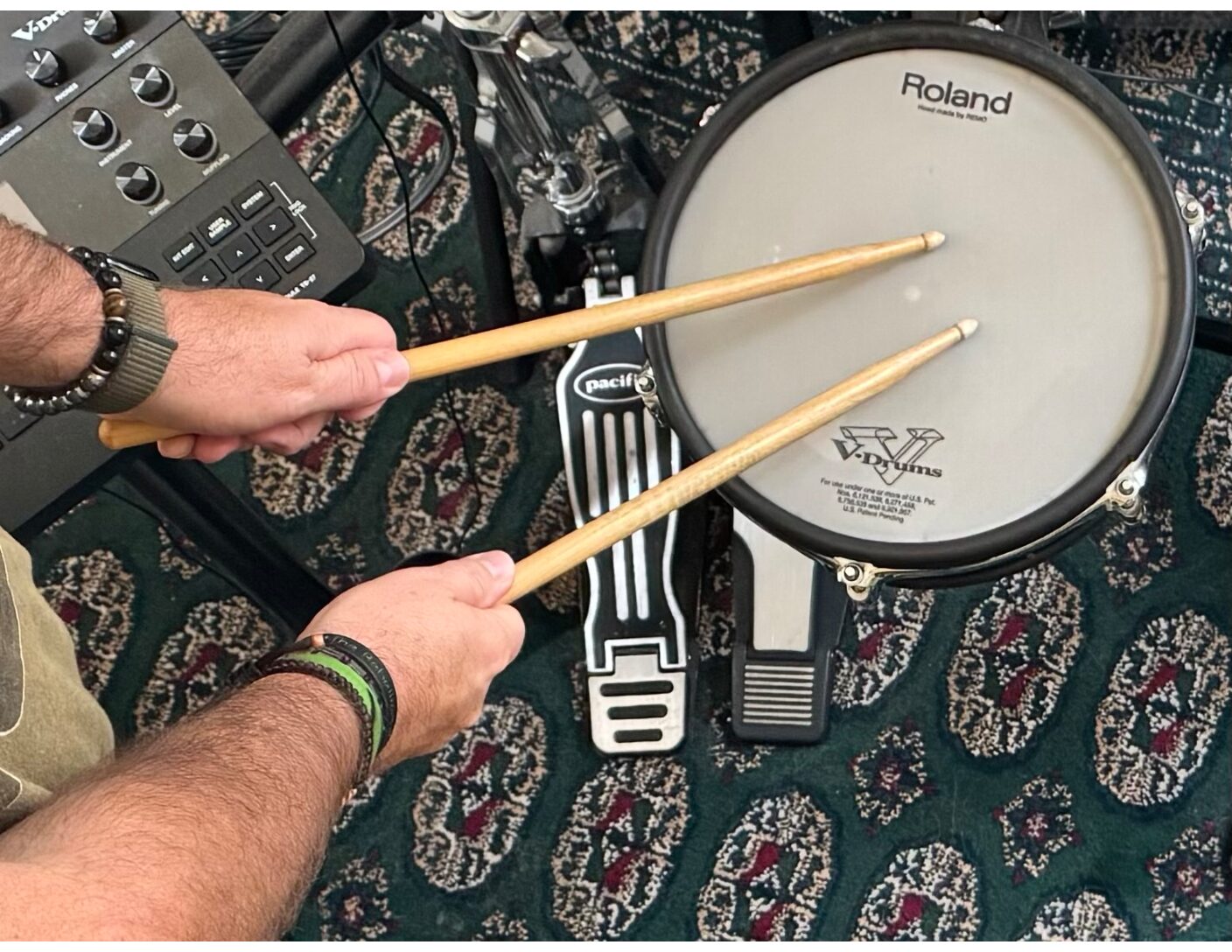
Prioritize clean technique. Proper drumstick grip, even strokes, and consistent stick height matter more than anything flashy. Habits you build in the first few months tend to stick, so it’s much easier to start clean than to fix things later.
How to Practice Drums in 15 Minutes a Day
To learn how to practice drums with a clear purpose, move through these four blocks. As a Sacramento drum teacher, I use this beginner drum practice routine to help students build consistent habits between lessons.
This article provides a 15-minute beginner routine. For a different guided session, try my drum practice timer’s separate 19-minute routine.
Minutes 1–3: Warm up. Start with relaxed single strokes on a pad or snare, alternating hands at a slow tempo. Loosen your wrists and fingers, and notice any tension in your shoulders or forearms. This isn’t about speed. It’s about getting your hands ready.
Minutes 4–7: Stick control. Pick one exercise, such as single strokes, double strokes, or a simple accent pattern. Keep the volume even and the stick heights consistent. If you’re working on accents, make the loud notes clearly louder and the soft notes clearly softer.
Minutes 8–11: Timing. Turn on a metronome and play something simple against it: quarter notes, eighth notes, or a basic rudiment. Listen closely to whether your notes land exactly with the click. If you drift, slow the tempo down and try again.
Minutes 12–15: Apply it to a groove or song. Use what you just practiced in real music. Play a basic rock beat, or work on a section of a song you’re learning. This final block keeps practice connected to the reason you started playing in the first place: making music.
How to Practice Drums Without a Full Kit
You don’t need a full kit to make real progress. A practice pad and a metronome cover most of this routine. If you’re just getting started, see my guide to starting drum lessons without a drum set.
- Warm-up and stick control translate directly to a pad, since single strokes, doubles, and accents all work on any surface.
- Timing work is just as effective with a metronome and a pad. Quarter notes, eighth notes, and simple rudiments all build the same internal clock.
- Groove practice can be adapted by tapping the rhythm of your hands on the pad, or by playing the pattern slowly on your lap with your feet moving along. It’s not identical to the kit, but it builds coordination and memory.
Save the full-kit work for your lessons and any time you do have behind the drums.
How to Practice Drums Without Common Beginner Mistakes
Knowing how to practice drums also means recognizing a few habits that slow your progress.
Rushing. Speeding up when something feels easy is natural, but it usually hides uneven timing. Let the metronome decide the tempo, not your excitement.
Practicing too fast. If you can’t play something cleanly, it’s too fast. Slowing down feels like going backward, but it’s the quickest route forward.
Skipping the metronome. Without a reference, it’s very hard to hear your own timing problems. The metronome isn’t a punishment. It’s a mirror.
Ignoring posture. Sit at a height where your thighs slope slightly downward, keep your back relaxed, and let your arms hang naturally. Tension and poor setup can cause discomfort and limit how well you play.
Track Your Progress Between Drum Lessons
When you learn how to practice drums consistently, progress can still be easy to miss day to day, so write it down. Here’s a simple seven-day log you can copy into a notebook or notes app.
| Day | Goal for the Session | Tempo (BPM) | Completed? | Notes |
|---|---|---|---|---|
| 1 | ||||
| 2 | ||||
| 3 | ||||
| 4 | ||||
| 5 | ||||
| 6 | ||||
| 7 |
Fill in your goal before you play, then add a quick note afterward: what felt good, what felt shaky, and what you want to ask at your next lesson. After a week, you’ll see patterns, and so will your teacher. Wondering how to turn that progress into a lesson schedule? Read my advice on how often to take drum lessons.
When Personalized Drum Lessons Make a Difference
Practice builds skill, but it can’t tell you what you’re doing wrong. A good instructor spots things you can’t easily hear or feel yourself: a grip that’s too tight, a hand that lags slightly behind, a habit of rushing fills. Left uncorrected, those small issues can repeat for months.
With personalized feedback, recurring problems get diagnosed quickly and replaced with exercises that fit you specifically. That means your 15 minutes at home are aimed at the right target. If you’re practicing regularly but feel stuck, a lesson is often the fastest way to get moving again. If you’re in the Sacramento area, I’d be glad to help you build a routine that fits your goals.
Frequently Asked Questions
How long should beginners practice?
Fifteen to twenty minutes of focused practice is plenty to start. Consistency matters more than length, and you can add time gradually as your technique and stamina improve.
Is daily practice necessary?
Daily practice is ideal because short, frequent sessions help your hands and brain retain what you learn. But if daily isn’t realistic, aim for several sessions a week. A few focused sessions beat one long, tiring one.
Can you improve with only a practice pad?
Yes. A pad is excellent for building stick control, timing, and technique. You’ll still want kit time to develop coordination between your hands and feet, but a pad and metronome can carry a large part of your early progress.